Ms Radiance: A Community-Led Social Media Intervention for Transgender Women in Malaysia
By Dr Lahari Telang • May 14, 2026 • equity
This research spotlight examines Ms Radiance, a community-led social media-based intervention designed to improve oral health awareness, sexual health awareness, and dental service utilisation among transgender women in Malaysia.
Why This Matters
Transgender women in Malaysia face substantial stigma and discrimination in daily life, including exclusion from employment and broader social participation. These pressures are reinforced by a legal system that does not recognise transgender identities.
The consequences extend into healthcare. Many transgender women avoid medical settings because of fear, mistrust, judgment, and wider systemic inequalities. That leaves important areas of health, including oral health and sexual health, under-addressed.
Research has shown elevated risks of sexually transmitted infections in this population, alongside low awareness of safer practices such as condom use during oral sex. Dental care utilisation is also limited, with some participants only seeking care when symptoms become severe and others turning to unprofessional treatment sources.
This is a health equity problem in a country that offers universal health coverage, including oral healthcare, but still struggles to reach marginalised communities effectively. Traditional outreach models, such as clinic-based counselling or broad public campaigns, often fail to connect with people who feel excluded from mainstream health services. In contrast, Malaysia’s high internet and social media use creates an opening for more community-responsive digital engagement.
What Was Done
The intervention was developed in partnership with community members, including artists, peer advocates, and local authorities involved in transgender health. The result was Ms Radiance: a community-led, easy-to-understand, free-to-access digital health education initiative.
The pilot targeted transgender women and used Instagram and WhatsApp over a 12-week period to deliver content on:
- oral health
- sexually transmitted infections
- safer sexual practices, especially condom use during oral sex
The material was delivered through short videos, visual posts, and animations. Participants could also use direct messaging to ask private follow-up questions.
The evaluation used a pre- and post-intervention design, with surveys assessing changes in knowledge, attitudes, and health behaviours. Interviews and group discussions were also conducted to understand participant experiences and assess how the intervention worked in practice.
A core strength of the project was its community-based participatory approach. Members of the transgender community contributed directly to the design and delivery of the intervention, helping ensure that the content was culturally relevant, respectful, and grounded in real-world needs.
Key Findings
- Community engagement fostered empowerment and greater ownership of health.
- Peer-supported learning on trusted social media platforms improved acceptability.
- Oral health awareness improved, alongside a stronger intention to seek dental care.
- Understanding of sexually transmitted infection transmission through oral sexual practices improved, as did condom use for oral sex.
What This Means for Equity and Policy
Ms Radiance suggests that digital health interventions can play an important role in reaching marginalised communities that are poorly served by conventional health promotion. For transgender women who experience stigma in healthcare settings, social media can offer a more accessible and less intimidating channel for receiving health information.
The findings indicate that community-informed digital education can improve knowledge and support healthier behaviours. Participants reported safer sexual practices and greater motivation to seek dental care, both of which matter for long-term oral health and broader wellbeing.
At the same time, the project also exposed important equity limits. Not all transgender women were able to benefit equally. Those living in rural areas, those with limited internet access, and those with lower digital literacy were less likely to engage fully. Language differences and cultural divisions within the community also shaped participation.
That means digital interventions should not be treated as a standalone fix. They are likely to be most effective when combined with broader community outreach, including partnerships with local organisations, peer networks, and in-person engagement where possible.
The wider policy message is clear: inclusive health promotion must be designed with communities rather than for them. Programs should use platforms that people already trust, while also pushing health systems toward more culturally competent and equitable care. With sustained investment and genuine community collaboration, digital initiatives like Ms Radiance could help reduce information gaps and improve access to preventive care for other underserved groups as well.
Citation and Links
- Telang LA, Daud HS, Rosita-Hanif Z, Nizam B, Cotter AG, Rashid A. Community involvement and engagement in designing a social-media based educational intervention for oral and sexual health promotion in transgender women in Malaysia: a narrative summary. Research Involvement and Engagement. 2025;11(1):29. https://doi.org/10.1186/s40900-025-00683-6
- Telang LA, Daud HS, Rashid A, Cotter AG. Exploring the barriers and enablers of oral health care utilisation and safe oral sex practices among transgender women in Malaysia: a qualitative study. BMC Public Health. 2025;25(1):1261. https://doi.org/10.1186/s12889-025-22417-9
- Telang LA, Daud HS, Cotter AG, Rashid A. Ms Radiance: a community-led social media mHealth pilot for transgender women. International Journal of Transgender Health. 2025. https://doi.org/10.1080/26895269.2025.2503224
- Telang LA, Cotter AG, Rashid A. Healthcare Access for Transgender Women in Malaysia: A Narrative Review of Barriers and Enabling Factors. Sexes. 2025;6(3):50. https://doi.org/10.3390/sexes6030050
About the Author
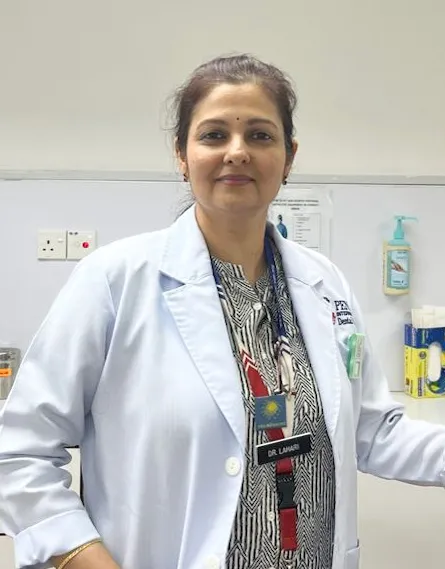
Dr Lahari Telang is Associate Professor, Head of Oral Medicine and Radiology, and Research Coordinator at MAHSA International College Penang, Malaysia, formerly Penang International Dental College.
She is also pursuing a PhD at the School of Medicine, University College Dublin, Ireland. Her work focuses on improving oral health awareness and care utilisation among vulnerable populations through participatory research and mHealth interventions.
Her broader interests include equitable oral healthcare, oral potentially malignant disorders, antimicrobial stewardship in dentistry, CBCT training, and dental education research.